
I’m Janet Bennett, M.Ed., CCC-SLP, a speech pathologist. Some of my clearest lessons come from the people I work with. This is the story of Amy, and of a small clue she never noticed.
Amy was a 41-year-old news reporter. She came to me because viewers were complaining. They said she sounded too slow and robotic on the air.
What Was Going On With Amy?
Amy worked weekends at the TV station. On those weekends, she got only about 3 hours of sleep a night. That is far less sleep than most people need.
Her biggest complaint was a dry mouth. Her mouth felt so dry that she was afraid she would say words wrong on the air. So she slowed down and worked hard on every word. That is why her speech sounded slow and labored.
Was Amy Breathing Through Her Mouth?
Amy said she had never thought about her breathing. When I asked, she told me her mouth stayed closed while she slept.
But her dry mouth told a different story. She was not taking any medicines that cause a dry mouth. If her mouth had stayed closed all night, it should not have felt so dry in the morning.
The Clue at the Corner of Her Mouth
I explained that the opening does not have to be wide. A tiny gap at the corner of the mouth can let just enough air through. A person can breathe through that gap all night and never know it.
Then Amy remembered something. She often woke up with dried saliva at the corner of her mouth. That was the key. Her lips were not fully sealed, and she was breathing through her mouth while she slept.
Signs You Might Be Mouth Breathing at Night
Amy’s story shows how easy this is to miss. These are the signs she had.
- Waking with a dry mouth, with no medicine that dries the mouth
- Dried saliva at the corner of the mouth in the morning
- Feeling sure the mouth stays closed at night, while the dryness says otherwise
- Speech that turns slow and careful because the mouth feels dry
What We Did
We started the IJustWantTo® Correct My Tongue Thrust program right away. The program trains the tongue to rest on the roof of the mouth, including during sleep. When the tongue rests there, the lips tend to stay closed, and breathing moves to the nose.
Each week, Amy practiced that lesson’s tongue exercises to build strength. I also taught her a simple breathing exercise. She began doing it right before she went on the air.
- Breathe in through your nose for as long as you can
- Then take 20 seconds to breathe that air out through your mouth
What Changed for Amy
After one week of exercises, Amy no longer had a dry mouth. Her delivery on the air changed, too. She went from slow and labored to a more normal pace, and she sounded more confident. She told me she had no idea that breathing through her nose could make such a difference.
After all 7 weeks, she still slept only about 3 hours on her weekend nights. But in those hours, she slept more deeply and woke up feeling more refreshed. Once her dry mouth went away, her confidence grew.
Why Tongue Position Matters for Nose Breathing
Your tongue’s resting spot is the roof of your mouth, just behind your upper front teeth. When it rests there, your lips tend to stay closed and you breathe through your nose. When the tongue drops low, the mouth can fall open, even by a tiny amount.
The program’s creator ran a small, self-reported study of participants before and after the program. In it, 98% of participants who had mouth breathing said it stopped, and 89% of those who woke with a dry mouth said it stopped. The group was small, so your results may differ.
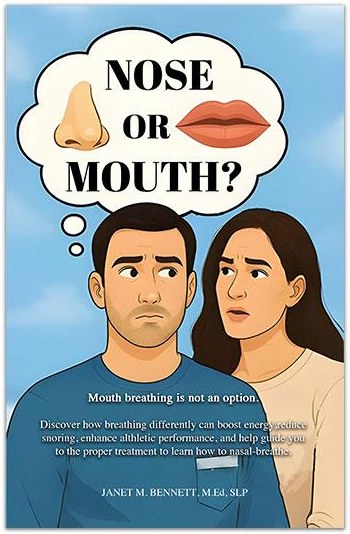
Want to learn more? Read about mouth breathing, or get our free eBook, Nose or Mouth.
When Should You Talk to a Doctor?
Amy’s dry mouth came from mouth breathing, but that is not true for everyone. Some medicines dry the mouth, so ask your doctor if you take any. If you can’t breathe through your nose, see a specialist first, because nose breathing matters for good results. Tongue exercises do not replace medical care.
Questions people ask
Can I breathe through my mouth at night without knowing it?
Yes. A tiny gap at the corner of your lips can be enough. Amy was sure her mouth stayed closed, but her dry mouth and the dried saliva at the corner of her mouth in the morning showed otherwise.
Why do I wake up with a dry mouth?
Breathing through your mouth while you sleep is one reason. Even a small opening at the lips lets air dry out your mouth. Some medicines can also cause a dry mouth, so check with your doctor if you take any.
How fast did Amy see a change?
Her dry mouth was gone after one week of exercises, and her speech on the air sped up to a more normal pace. Everyone is different. Some people notice a change in days, and others need several weeks. Finish all 7 lessons, because some muscles start weaker and need more time.
Who can do the program?
Anyone age 8 and up who can follow directions and practice twice a day, 15 to 20 minutes each time. Every program comes with a 60-day money-back guarantee. See our terms and refunds for the details.
Train Your Tongue to Rest in Its Spot
IJustWantTo® Correct My Tongue Thrust gives you 7 video lessons, a Tongue Stick™ for your exercises and a 60-day money-back guarantee.